Leaks opened up, dried, rebuilt and re-textured — in Denver and all around it.
A brown ring on the ceiling is the part you can see. What matters is the part above it: how far the water travelled along the joist, how much of the board went soft, and whether the insulation up there is still holding water against the wood.
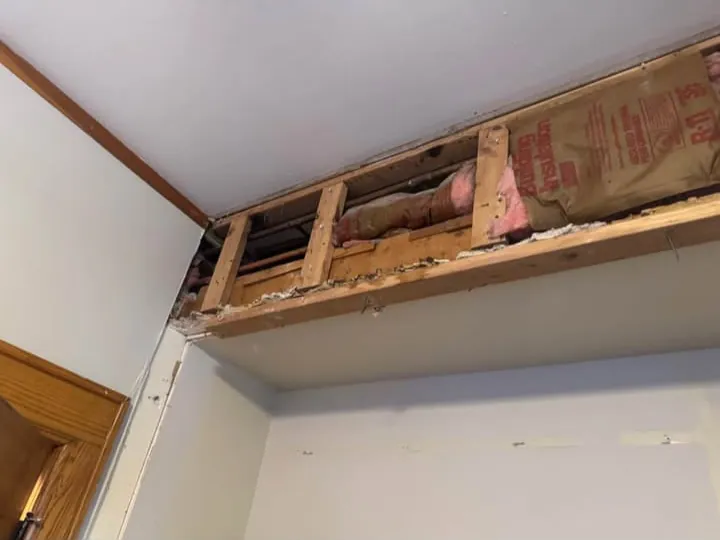
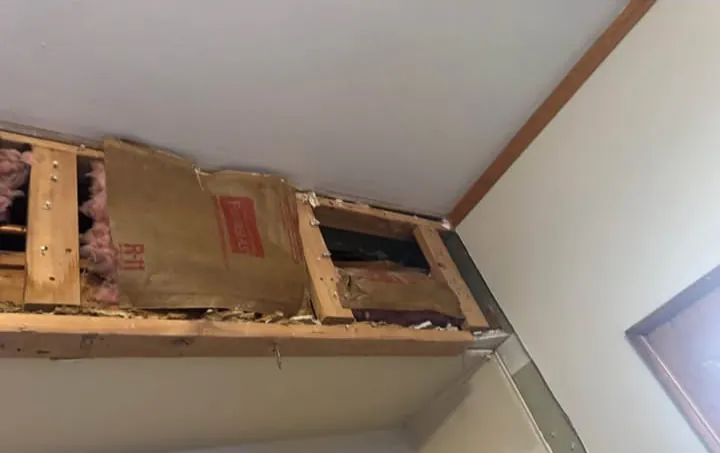
We open the ceiling back to solid edges and look. That is the only honest way to price this work, and it is why we would rather cut a clean square today than paint over a stain that comes back through in a month.
Once it is open, the wet board comes out, the framing and insulation get looked at, and nothing goes back until the cavity is dry. Closing a ceiling over wet material is how a stain becomes a smell, and later a bigger hole than the one you started with.
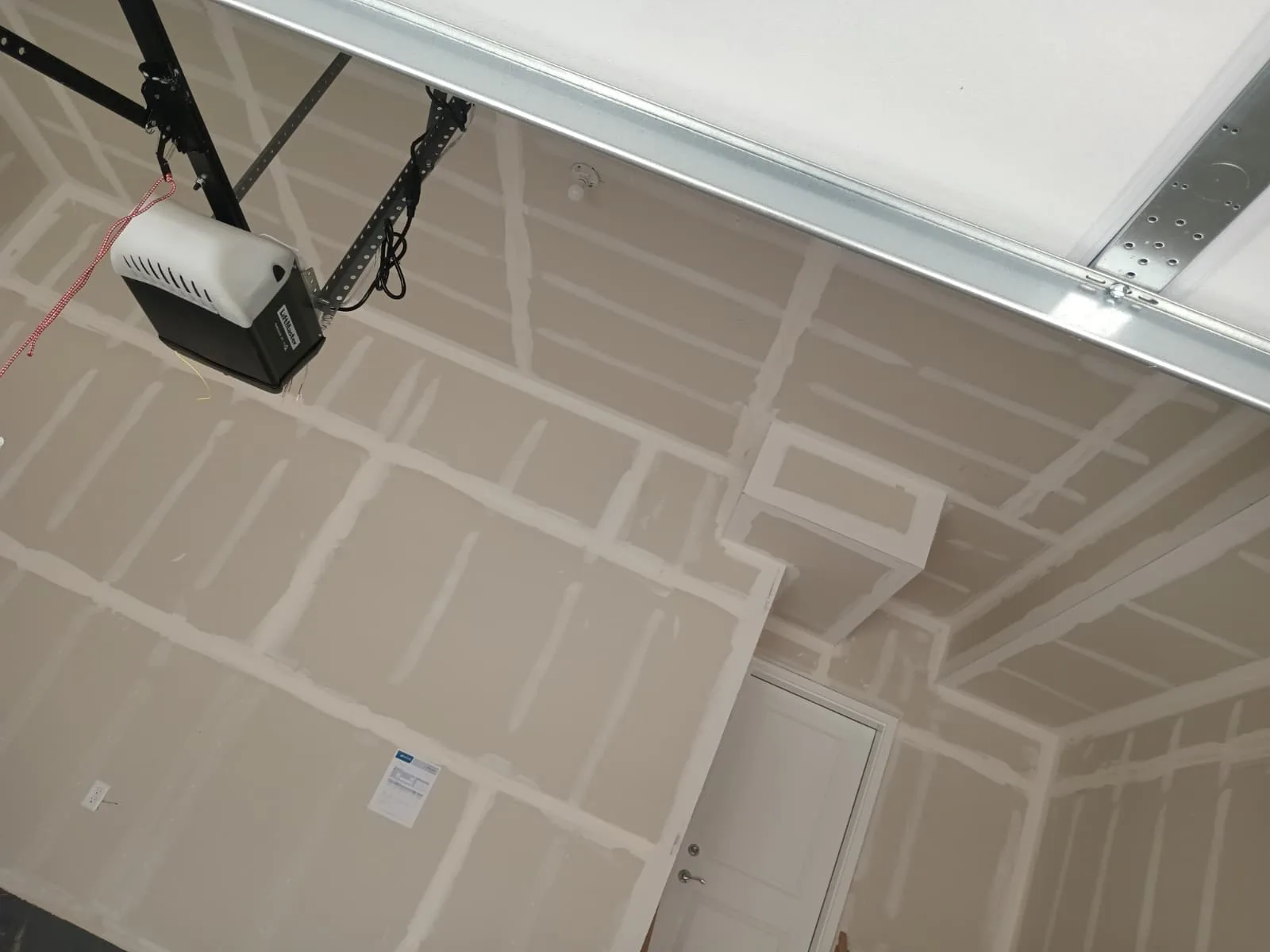
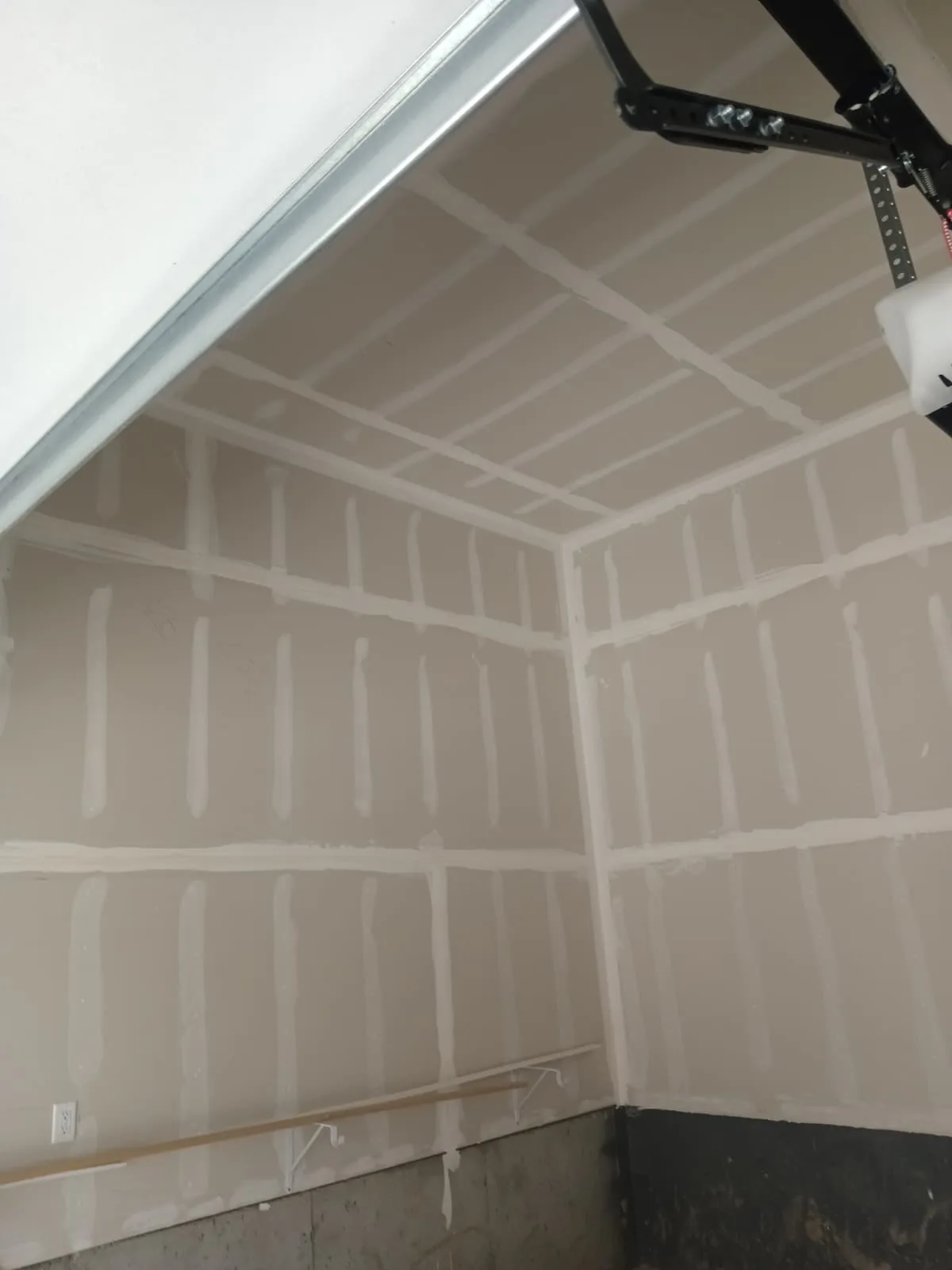
Then the ceiling is rebuilt: board hung to the joists, joints taped and coated, and the texture matched across the repair so the patch does not sit in the middle of the room announcing itself. Ceilings are less forgiving than walls — the light crosses them flat, so the feathering has to run wider than it does anywhere else in the house.
A photo starts the conversation, but water damage gets a look in person, because how far it spread above the ceiling is the whole price.
The damaged section is cut back to solid board and solid framing, so nothing soft stays hidden behind the repair.
Nothing goes back over a wet cavity. If the leak itself is still live, that gets fixed first — by you, your plumber, or your roofer.
Board, tape, coats and texture, matched across the repair and out into the ceiling so the light does not find the seam.
Raeford, Fayetteville and the towns around them are not one market — a Fort Bragg rental turning over, a brick ranch off Bragg Boulevard and a new build in Hope Mills are three different jobs.
Tell us what happened to the wall or the ceiling — send a photo on WhatsApp if that is quicker. Free estimate, English or Spanish.
Call (720) 909-4362